

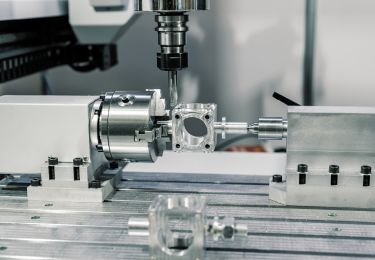
 ± 0.005″ (0.127 mm) is the tolerance level commonly considered as a benchmark for precision machining. It refers to the standard tolerance for CNC machining and the acceptable deviation. However, machine shops with the right equipment and talent can provide much tighter machining tolerance levels, up to ± 0.0001″.
To understand what these figures mean, you first need to know what tolerance is. Cheetah Precision is here to help.
What Is Tolerance?
Tolerance, also known as dimensional accuracy, is the allowable variation in the dimension of a machined part. We express it as a maximum and minimum dimensional limit within which a workpiece must conform for it to be usable.
But what is the purpose of tolerance? Can’t we have identical components with the exact measurements? The reality is that no two parts can be similar. There will always be some variation due to various reasons.
Even with the same and most accurate CNC machine, the final dimensions of the two parts will vary. The important thing is to have acceptable tolerance levels.
Common CNC Machining Tolerances
Precision machining shops will often use engineering tolerance when defining product measurements. The manufacturer will assume a general tolerance grade unless the client specifies a certain tolerance level.
These common CNC precision machining tolerance are:
- Standard tolerance
- Limited tolerance
- Unilateral tolerance
- Bilateral tolerance
- Geometric Dimensioning and tolerancing
At Cheetah Precision, we work closely with our customers to meet their required tolerances. We take them through all the processes and engage them at all levels of parts production.
Factors That Impact Machining Tolerances
Many factors affect the tightness of tolerance achievable in precision machining. Some of these include:
- Material. Various materials behave differently when put under stress. Some are extremely difficult to work with, while others are easier. For example, abrasive materials prove challenging in the precision machining process. They wear down the cutting machinery, affecting the tolerance levels of the final design.
- Machining type. The machining method also affects the precision machining tolerance. For example, CNC screw machining uses a disc cam to feed a workpiece via a guided bushing. That means the part moves around the tool instead of vice versa. Since the tool has minimal movement, the process experiences less vibration and deflection, allowing better precision.
- Plating and finishes. Planting and finishing involves adding small quantities of material to the surface of a part. It can significantly affect the machining tolerance.
- Cost. Generally, the tighter the precision tolerance, the higher the price. They require more time and labor to achieve. Unnecessarily tight tolerances also increase the potential for scrapped parts, further adding expenses.
Choose Cheetah Precision
Tolerance is an essential consideration in every precision machining process. It determines the usability and interchangeability of parts in equipment. Ensure you work with your machining shop to determine the best tolerance level.
At Cheetah Precision, we pride ourselves on providing high-quality machined parts with tight tolerances. Our highly skilled engineers and technicians work closely with you to ensure we achieve precision and accuracy. For more information about our high-precision machining services, contact us today via phone ((651) 633-4566) or email.
Click to learn more about us.


